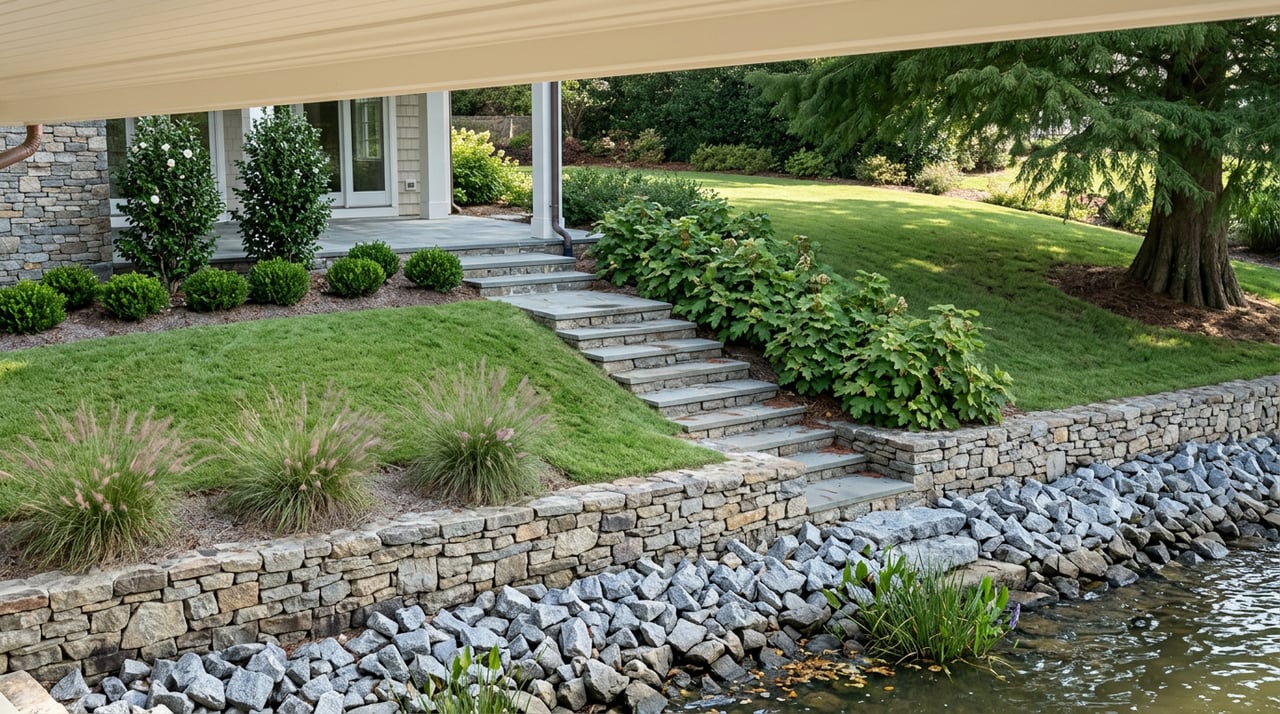
Every waterfront listing in Crown Harbor shows the same thing in the photos: a private dock, maybe a covered slip, water lapping against the seawall. It reads like part of the house. On paper, at closing, it isn't.
Lake Norman is not a natural lake. Duke Energy built it in the 1960s to run a hydroelectric system, and the company still owns the lakebed and the shoreline down to what's called the full-pond elevation, the 760-foot line that marks the water surface when the reservoir is completely full. Everything below that line, including the dock that photographs so well in a listing, sits on Duke Energy's property under Duke Energy's rules, not the homeowner's. A buyer can close on a Crown Harbor waterfront home and still not hold the legal right to keep, rebuild, or modify the dock that came with it until Duke says so.
That distinction rarely shows up in a showing. It shows up during due diligence, or worse, after closing, when a new owner tries to add a lift and finds out the permit never transferred.
The Line the Survey Doesn't Explain
Duke Energy operates Lake Norman under a federal license from the Federal Energy Regulatory Commission, and that license gives Duke authority over anything built on, over, or in the water below the 760 line. The company manages what's allowed through its Catawba-Wateree Shoreline Management Plan, which assigns every stretch of shoreline a classification that determines dock size, placement, number of slips, and whether a covered structure is even permitted at all.
Owning the land up to the water doesn't include owning the water. It only includes the right to apply for permission to build something on it.
What Happens to the Permit at Closing
Duke Energy issues lake use permits to a person or an entity, not to a parcel. That means the permit doesn't move with the deed the way a fence or a driveway does. When a Crown Harbor waterfront home sells, the buyer typically has to register with Duke or submit a new application to establish their own standing for the existing dock. If the seller never transferred the original permit, the buyer inherits whatever compliance issues surface when that transfer process starts, not the seller.
This is the part that catches people off guard. A dock that has sat quietly on the water for fifteen years with no problems can still turn into an open question the moment ownership changes hands, because the paperwork behind it was never as settled as the structure looked.
Older docks sometimes carry what's informally called grandfathered status, meaning they were built under looser rules that predate the current Shoreline Management Plan. That status is fragile. Modify the dock, expand it, or change its footprint, and the grandfathering can disappear, leaving the structure subject to whatever the current classification allows, which may be considerably less.
Crown Harbor's Extra Wrinkle
Most Lake Norman communities put buyers on one of two paths: a private dock tied to the lot, or nothing at all. Crown Harbor complicates that binary in a way worth understanding before you write an offer. The community is built around its own shared dry-dock storage building and marina, one of the only residential communities on the lake set up this way, alongside private docks and deeded boat slips on individual lots.
That means due diligence in Crown Harbor isn't a single question. A home with a private dock follows the Duke Energy permit path described above. A home tied to a deeded slip in the community marina follows a different one, running through the HOA's dock master agreement and whatever transferability terms govern slip assignments. Buyers evaluating two homes in the same neighborhood, one with a private dock and one with a deeded slip, are actually comparing two different sets of paperwork, not two versions of the same amenity.
Anyone shopping Crown Harbor specifically for water access should ask early which category a given property falls into. The answer changes what documents to request and who to call to confirm them.
A Timeline That Doesn't Wait for a Closing Date
Standard reviews for a private dock through Duke's Lake Access Permit System typically run four to twelve weeks, and that clock starts when a complete application goes in, not when an offer is accepted. Projects involving dredging, shoreline fill, or wetland impacts take longer, because they pull in the U.S. Army Corps of Engineers and the North Carolina Department of Environmental Quality alongside Duke.
If a buyer's plans include adding a slip, covering an open platform, or accommodating a larger boat than the current permit anticipates, that review needs to start well before the purchase decision locks in, not after the moving trucks leave. The listing might show exactly what a buyer wants. The permit on file may not authorize it.
What's Actually in Motion Right Now
This isn't a static rulebook. Duke Energy has been holding public meetings to review proposed changes to the Catawba-Wateree Shoreline Management Plan, the same plan that governs every dock, pier, and shoreline structure on Lake Norman. One such meeting drew property owners to the Charles Mack Center to hear directly from Duke Energy representatives about the proposed revisions, according to reporting from the Statesville Record & Landmark.
Anyone under contract on a Crown Harbor waterfront home, or planning to be soon, should treat this as live information rather than background noise. A shoreline classification that allows a covered slip today is defined by a plan that Duke Energy is actively revising. Buyers with dock plans that depend on current rules should confirm those rules haven't shifted underneath them by the time the permit application gets filed.
Before You Write an Offer
A short list of what to request from the seller and confirm independently before the dock becomes part of your purchase math:
- The Duke Energy permit number or recorded shoreline agreement for the dock, plus any as-built drawings on file.
- Written confirmation from the seller on whether the permit has ever been transferred, and to whom.
- The parcel's shoreline classification, confirmed directly with Duke Energy rather than assumed from what's currently built.
- For deeded slip properties, the HOA's dock master agreement and its transferability terms.
- A recent survey showing the full-pond line and the dock's position relative to the property boundary.
None of this is exotic paperwork. It's the difference between buying a house with a dock and buying a house with a dock question mark.
The County Line Runs Through This Too
Crown Harbor sits in Mecklenburg County, and that adds a layer beyond Duke's approval. Waterfront buyers on the Cornelius side of the lake typically need local zoning sign-off in addition to Duke's shoreline permit, and Mecklenburg County's zoning review can carry additional requirements that don't apply the same way on the Iredell County side near Mooresville. Duke's approval is necessary. It's rarely the only approval a shoreline project needs.
Why This Matters at Today's Prices
Lake Norman's waterfront median sat at $2,364,000 in the first quarter of 2026. At that price point, buyers aren't purchasing a project. They're paying for a finished lake lifestyle, and the dock is inseparable from that expectation. A buyer spending that kind of money deserves the same certainty about the water as they have about the house, and right now, on Lake Norman, that certainty requires a phone call to Duke Energy, not just a walk-through with a tape measure.
The dock in the listing photo is real. Whether it's legally yours the day you close depends on paperwork that has nothing to do with the price you negotiated.
Crown Harbor's mix of private docks, deeded marina slips, and a Shoreline Management Plan currently under revision makes this exactly the kind of transaction where local, current knowledge changes the outcome. Christy Walker & Associates works these waterfront closings regularly and can walk you through what a specific dock's paperwork actually says before you're locked into a contract. Request a personalized Lake Norman market consultation and bring your questions about the water, not just the house.
A Few Direct Questions
Can I buy a Crown Harbor waterfront home and add a dock or lift after closing? Yes, subject to Duke Energy's approval, the parcel's shoreline classification, and any applicable Mecklenburg County permits. Budget four to twelve weeks for a standard review, longer if the project touches dredging or wetlands.
What if the seller can't produce permit documentation for an existing dock? That's a due diligence flag, not a deal breaker on its own. Duke Energy can investigate undocumented structures, and the new owner inherits the compliance obligation. Ask for documentation before closing, and if it doesn't exist, negotiate with that risk priced in.
Does a deeded marina slip in Crown Harbor follow the same rules as a private dock permit? Not exactly. The marina structure itself operates under its own Duke Energy approval, but your rights as a slip holder run through the HOA's dock master agreement. Request that document separately from any Duke Energy permit paperwork.